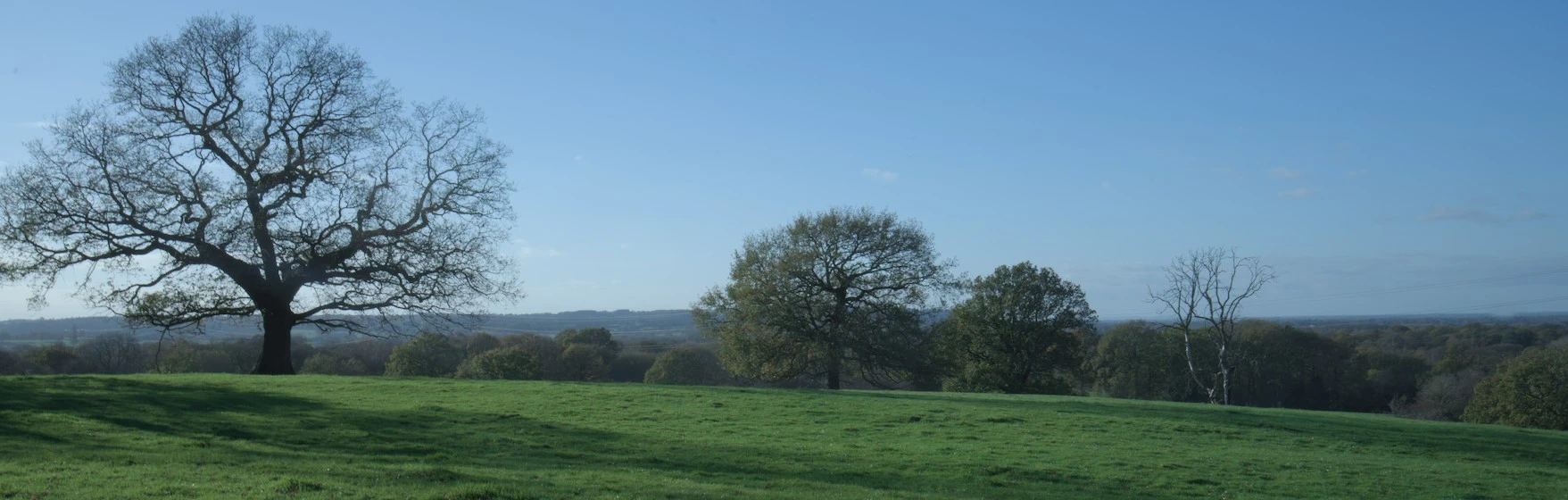
Hedgerows and habitat connectivity
Cheshire Wildlife Trust highlights Adlington’s “small fields with high hedgerows” and abundant woodland, forming “a network of habitats” linking the Peak District to the Cheshire Plain 1. Hedgerows are vital wildlife corridors, providing cover and food for birds, insects and small mammals 2. Removing them would sever these habitat links. As the Forestry Commission notes, ancient hedges are a habitat “like no other”, underpinning pollinator networks and helping meet carbon sequestration goals 3.
Oak trees and biodiversity
English oaks are keystone trees: one study found oaks support “more life than any other UK native tree” 4 – roughly 2,300 species of insects, birds and fungi. Many of these depend almost entirely on oak. Removing mature oaks thus erases a vast habitat niche and releases the large carbon stores held in old wood.
Ancient woodlands
Ancient woods (sites wooded since at least 1600) are truly irreplaceable. Forestry Commission experts call them “the jewels in the crown… rich irreplaceable communities of often rare species which have developed over centuries”3. These fragments harbor immense biodiversity and carbon. By law ancient woodland is classed as “irreplaceable habitat” 5, so its loss is allowed only in truly exceptional cases. Destroying an ancient wood would permanently erase centuries of biodiversity and carbon storage.
Fragmentation and climate effects
Clearing Adlington’s green fields for sprawl would shatter this ecosystem network. Small, isolated remnants store far less carbon than intact habitat – “fragmented habitats mean fewer [carbon storage] zones” and thus more CO₂ in the atmosphere 6. Fragmentation also undermines ecosystem services (flood control, water filtration, pollination) that rely on continuous green cover 6. In sum, losing Adlington’s hedges, oaks and woods would devastate local biodiversity and weaken the area’s climate resilience.