What Are the Objections?
Why We Oppose the Development
A Complete Lack of Consultation
Supporters of Adlington Greenbelt stands firmly against the secrecy surrounding this proposal. Residents, councils, and environmental experts were not consulted at any stage, an unacceptable breach of trust and transparency.
A New Town Larger Than Macclesfield
The plan is not designed to meet local need. It is a 20,000-home new town, housing around 55,000 people, imposed on rural Greenbelt.
Permanent Loss of Protected Countryside
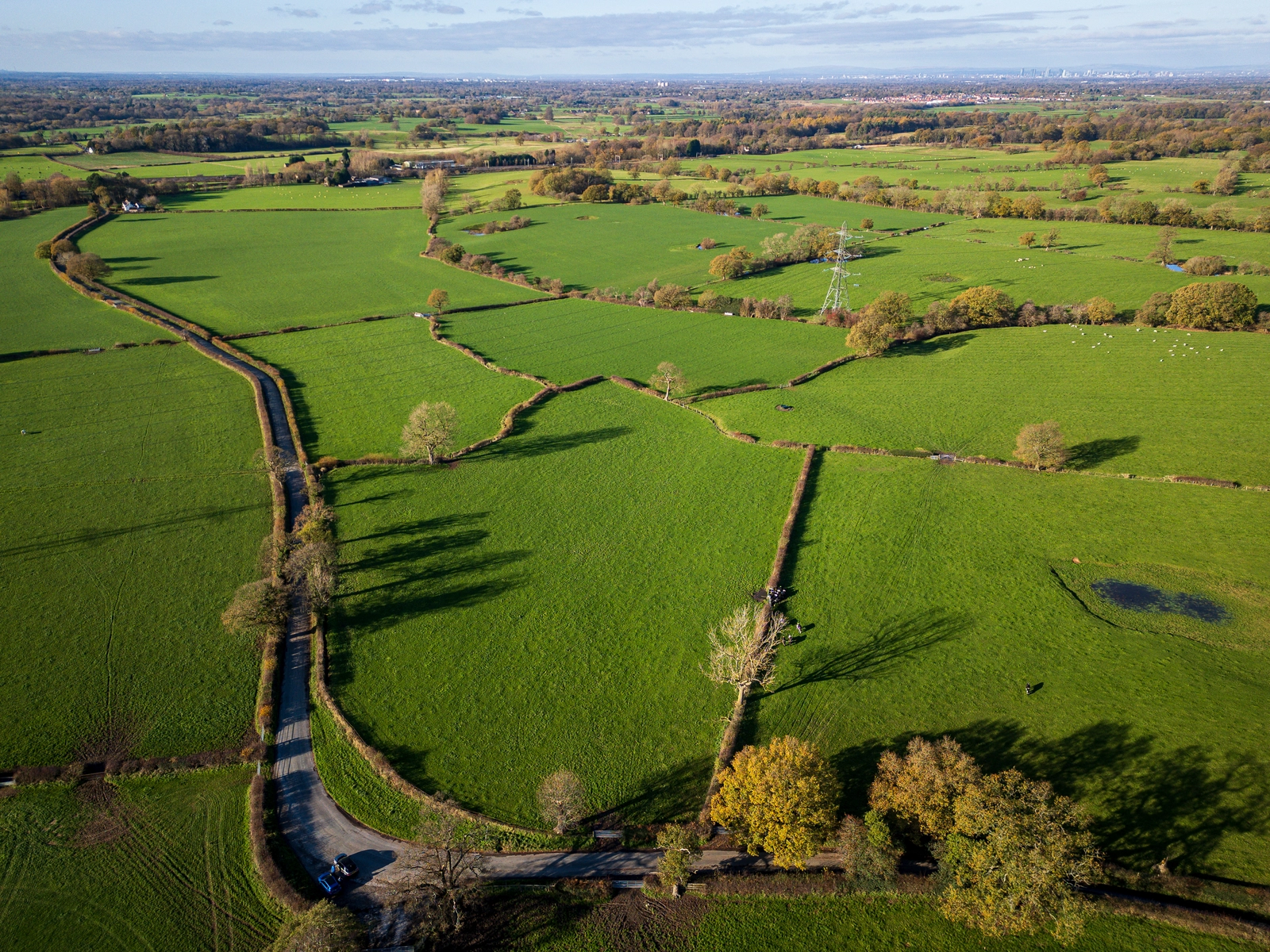
Greenbelt is meant to stop urban sprawl. Once built on, it’s gone forever — and the precedent opens the door for further destruction across Cheshire and beyond.
The Numbers Don’t Add Up
The developer has not presented credible plans for:
- Healthcare
- Schools
- Water supply
- Utilities
- Transport capacity
- Flood management
- Environmental mitigation
This proposal is unsustainable — environmentally, socially, and economically.
Increased Risk of Flooding
Building a New Town at Adlington presents clear and material flood risks. Large parts of the site lie in Flood zones 2 and 3 1 (areas with medium-to-high probability of river flooding), meaning the baseline risk of flooding is already elevated. Natural Flood Defences The removal of large areas of trees and vegetation and the replacement of permeable ground with roofs, roads and concrete, will significantly increase surface water runoff. Tree roots, soil and fields act as natural sponges and serve as a Natural Flood Management system 2. Mature woodland and soils slow, store and evaporate rainfall; removing thousands of trees reduces that storage capacity and accelerates the speed and peak of runoff into ordinary watercourses and rivers, raising flood peaks downstream. The cumulative effect of hard surfacing across a very large new neighbourhood would therefore tend to increase local and downstream flood frequencies. Large deciduous trees can absorb and evaporate up to 2000 litres of water per day 3.
Read more
Building a New Town at Adlington presents clear and material flood risks. Large parts of the site lie in Flood zones 2 and 3 1 (areas with medium-to-high probability of river flooding), meaning the baseline risk of flooding is already elevated. Natural Flood Defences The removal of large areas of trees and vegetation and the replacement of permeable ground with roofs, roads and concrete, will significantly increase surface water runoff. Tree roots, soil and fields act as natural sponges and serve as a Natural Flood Management system 2. Mature woodland and soils slow, store and evaporate rainfall; removing thousands of trees reduces that storage capacity and accelerates the speed and peak of runoff into ordinary watercourses and rivers, raising flood peaks downstream. The cumulative effect of hard surfacing across a very large new neighbourhood would therefore tend to increase local and downstream flood frequencies. Large deciduous trees can absorb and evaporate up to 2000 litres of water per day 3.
Read more
Environmental Impact
Hedgerows and habitat connectivity Cheshire Wildlife Trust highlights Adlington’s “small fields with high hedgerows” and abundant woodland, forming “a network of habitats” linking the Peak District to the Cheshire Plain 1. Hedgerows are vital wildlife corridors, providing cover and food for birds, insects and small mammals 2. Removing them would sever these habitat links. As the Forestry Commission notes, ancient hedges are a habitat “like no other”, underpinning pollinator networks and helping meet carbon sequestration goals 3.
Read more
Hedgerows and habitat connectivity Cheshire Wildlife Trust highlights Adlington’s “small fields with high hedgerows” and abundant woodland, forming “a network of habitats” linking the Peak District to the Cheshire Plain 1. Hedgerows are vital wildlife corridors, providing cover and food for birds, insects and small mammals 2. Removing them would sever these habitat links. As the Forestry Commission notes, ancient hedges are a habitat “like no other”, underpinning pollinator networks and helping meet carbon sequestration goals 3.
Read more