
Introduction to the New Towns Shortlist SEA Consultation and why it matters?
The Government’s New Towns Shortlist Strategic Environmental Assessment (SEA) sets out the environmental evidence for potential large-scale development across England. Although Adlington was not selected as one of the shortlisted New Town locations, the SEA still identifies it as a “viable alternative site”. This means Adlington remains under consideration for future development, and it is important that residents continue to respond so that the environmental, agricultural, and infrastructure sensitivities of the area remain clearly documented.
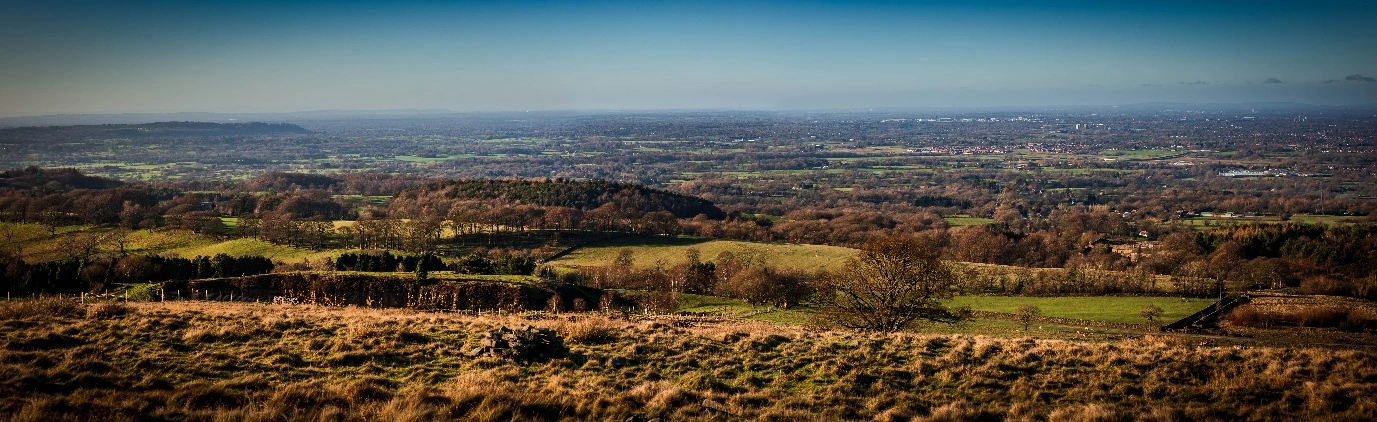
This consultation allows the public to ensure that the SEA accurately reflects the realities on the ground. Adlington contains irreplaceable natural assets — including wildlife corridors, mature trees, hedgerows, and deep, carbon-rich soils — that cannot be recreated once lost. Protecting these features is essential for biodiversity, climate resilience, and long-term food security.
Recent years have shown how quickly global supply chains can be disrupted, whether through political instability, conflict affecting shipping routes, or sudden shocks such as the COVID-19 pandemic. As the UK is no longer part of the EU’s agricultural frameworks, domestic food production and farmland protection play a more direct role in national resilience. Building over productive farmland in Adlington would reduce local food-growing capacity at a time when many organisations emphasise the need to strengthen domestic supply.
Brownfield regeneration sites — such as Manchester Victoria North, Leeds South Bank, South Barking, Thamesmead, and Plymouth — already have infrastructure, transport links, and lower environmental impact. These locations align with the principle of “brownfield first”, avoiding the irreversible loss of countryside and agricultural land.
Responding to this consultation ensures that decision-makers understand why Adlington remains unsuitable for large-scale development and why its natural assets must be protected.
Specific to Adlington
Q7 - Positive Features of Locations
Adlington does not demonstrate the positive features expected of a sustainable New Town location. Preferred locations should reuse previously developed land, integrate with existing transport and services, minimise environmental harm, and support regeneration. Brownfield exemplars such as Manchester Victoria North and Leeds South Bank “demonstrate strong alignment with a brownfield-first approach… and integration with existing infrastructure.” Adlington does not share these characteristics.
Q8 - Barriers to Development in Adlington
Key constraints include ecological risk (“Threat to flora and fauna through habitat disruption”), irreversible environmental loss (“Permanent destruction of environmental assets”), wildlife corridor fragmentation, infrastructure limitations, and documented community opposition. These barriers significantly reduce deliverability.
Q9-12 - Environmental Considerations
Adlington presents high environmental sensitivity: habitat loss and fragmentation, loss of soil carbon and farmland, irreversible ecological damage, and reduced climate resilience. The site cannot meet the principle to “avoid damage to irreplaceable ecosystems.”
The area contains a connected network of wildlife corridors, hedgerows, grasslands, mature trees, and deep, undisturbed soils that support a wide range of species. These corridors allow wildlife to move, feed, breed, and adapt to changing conditions. Once these connections are broken, the ecological impact is long-lasting and often irreversible.
The area’s mature trees and hedgerows also play a critical role. They store carbon, regulate temperature, support pollinators, and provide habitat for birds and mammals. These features take decades to develop and cannot be replaced quickly or effectively.
Equally important is the carbon stored in Adlington’s soils. Undisturbed farmland and grassland soils contain large carbon reserves, complex root systems, fungi networks, and micro-habitats that support biodiversity. When these soils are dug up, compacted, or built over, the carbon is released and the ecological structure is permanently destroyed.
Terms such as “biodiversity net gain” are sometimes used to suggest that ecological losses can be offset elsewhere. While net gain can improve degraded land, it cannot recreate mature ecosystems, soil carbon stores, or long-established wildlife networks. It is a mitigation tool — not a substitute for protecting what already exists.
For Adlington, the principle is clear: Once these habitats, trees, and soils are gone, they cannot be recreated in any meaningful or timely way.
Q13 - Proposed Locations
Adlington should not be selected as a New Town location. Brownfield alternatives such as Manchester Victoria North, Leeds South Bank, South Barking, Thamesmead, and Plymouth “avoid damage to irreplaceable ecosystems” and are “better connected to existing infrastructure.”
Q14-15 - Government Support Needed
Government support should prioritise brownfield regeneration through enhanced land remediation relief, Stamp Duty reductions, business rates relief, accelerated capital allowances, VAT reform, targeted development credits, and levies on greenfield development (“Introduce levies to reinforce a brownfield-first approach”).
Q16-23 - Planning Policy
Adlington highlights the need for clearer brownfield prioritisation, mandatory ecosystem protection, biodiversity net gain that is additional, avoidance of development on wildlife corridors, and meaningful community engagement (“Ensure biodiversity net gain is additional, not compensatory”).
Opposition Campaign Summary
Why Adlington Is the Wrong Place for a New Town
Adlington is environmentally rich and one of the least suitable places for a New Town. National planning guidance emphasises a brownfield-first approach, which Adlington cannot meet.
1. It Would Destroy Irreplaceable Nature
The area contains vital wildlife corridors, hedgerows, and grasslands. Experts warn of “Threat to flora and fauna through habitat disruption.” Once lost, these habitats cannot be replaced.
2. The Infrastructure Isn’t There
Adlington lacks the transport capacity, employment access, and service integration needed for a sustainable new settlement. Development would increase car dependency and pressure on local services.
3. The Community Doesn’t Support It
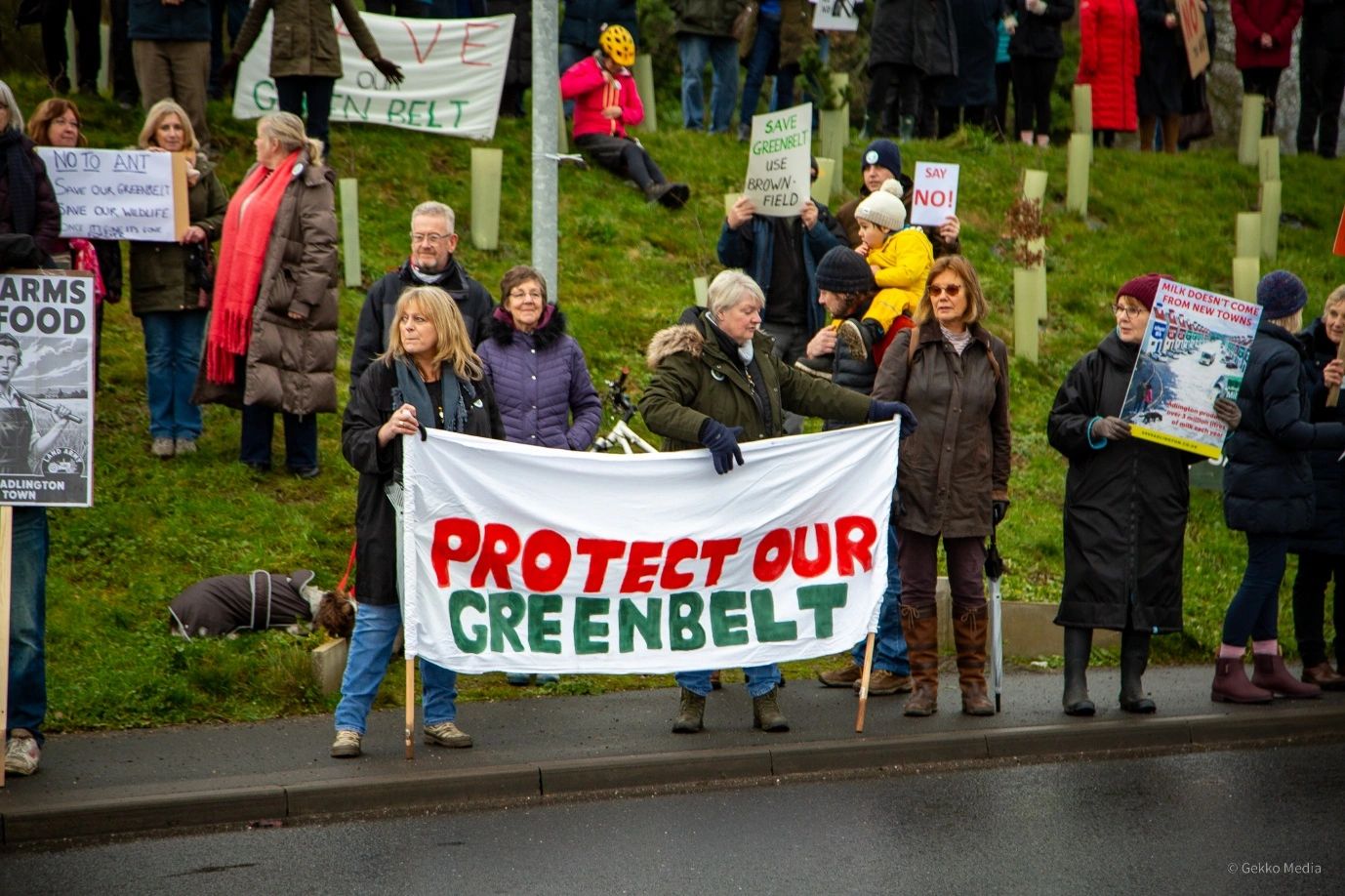
There is a documented lack of support for the proposal. Successful development depends on community backing, which is absent here.
4. It Would Remove Productive Farmland
The site includes high-value farmland and soil carbon stores. Building over it would undermine food security and climate resilience.
Better Alternatives Already Exist
Brownfield regeneration sites such as Manchester Victoria North, Leeds South Bank, South Barking, Thamesmead, and Plymouth “demonstrate strong alignment with a brownfield-first approach… and integration with existing infrastructure.” These locations deliver homes without destroying countryside.
What We’re Calling For
A planning system that prioritises brownfield regeneration, protects wildlife corridors, safeguards farmland, requires meaningful community engagement, and uses tax incentives to unlock sustainable sites (“A brownfield-first approach… represents the most sustainable and deliverable strategy”).
The Message
Adlington is the wrong place for a New Town — and the right places already exist. Protect the countryside and focus development where it is sustainable, supported, and deliverable.