
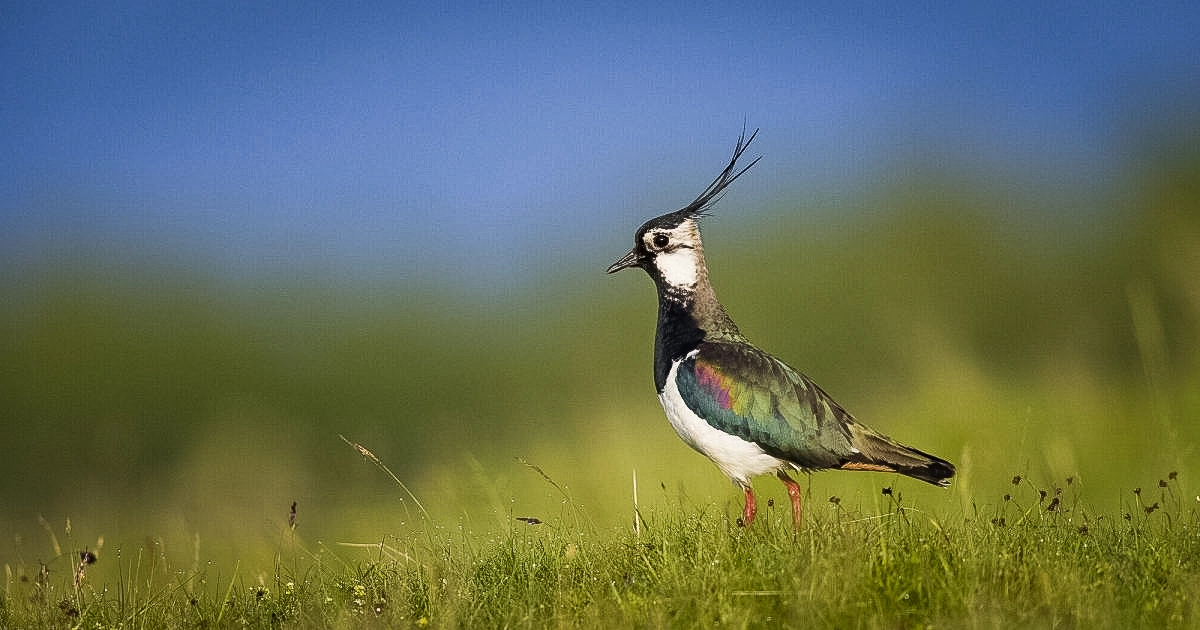
The Northern Lapwing is one of the most distinctive birds of the British countryside and a special part of the farmland landscape around Adlington, Cheshire.
Often known as the “Peewit” because of its unmistakable call, this remarkable bird is a sure sign that spring has arrived.
Our campaign group has adopted the lapwing as a symbol of the wildlife and countryside we are working to protect in Adlington. We encourage families, walkers and wildlife enthusiasts to explore the public footpaths and enjoy spotting these beautiful birds.
See if you can spot or hear a lapwing on your next walk around Adlington.
What to Look For?
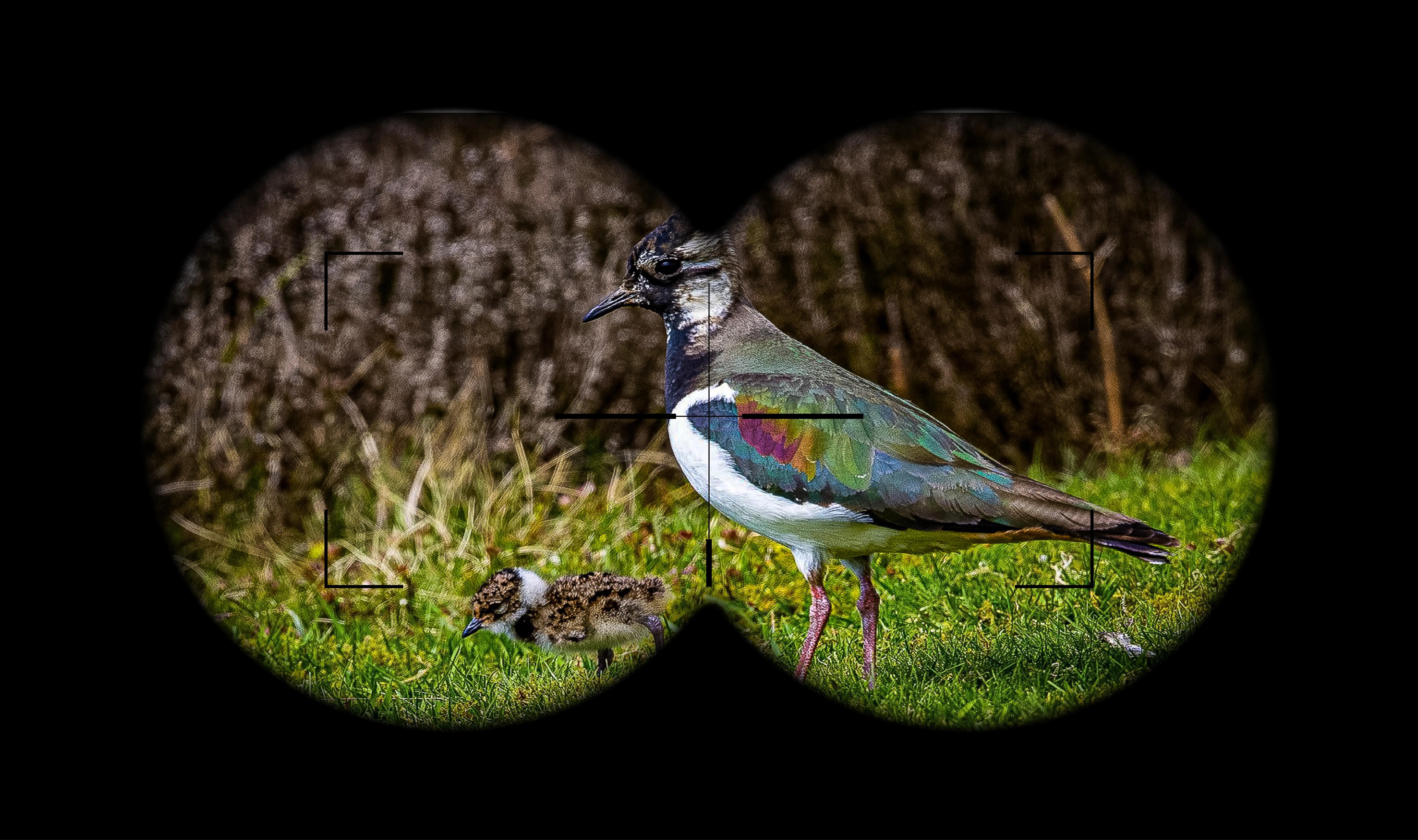
The best time to spot lapwings is early morning and late afternoon, especially during spring display season (March–May).
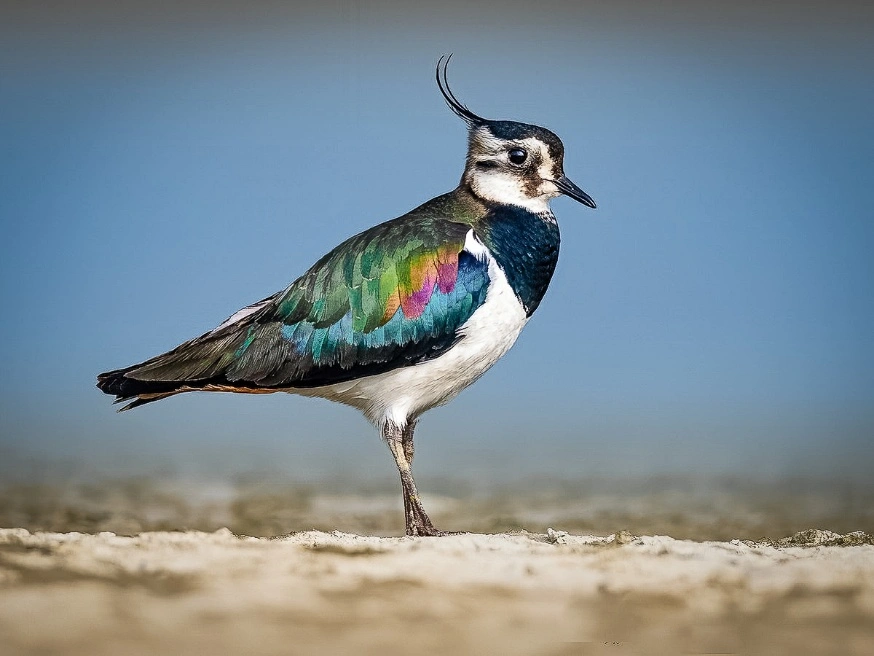
- Black and white bird plumage.
- Long elegant crest.
- Iridescent green and purple sheen in the sunlight.
- Long pink legs.
- Slow, tumbling display flights - Lapwings often fly in zig-zag patterns with broad rounded wings that make them easy to recognise.
- Lapwings are often heard before they are seen with their loud, distinctive “PEE-WIT… PEE-WIT!” calls.


Did you Know?
As well as its name “lapwing”, this bird is also known as the “peewit”, “tee-wit”, “chewit” and the “green plover”.
Its Latin name, Vanellus, means “little fan” and refers to its floppy, flapping flight. The name lapwing is thought to derive from an Old English term meaning ’leap with a flicker in it’ because the dense winter flocks of birds appear to flicker between white and black when the birds flap their wings.
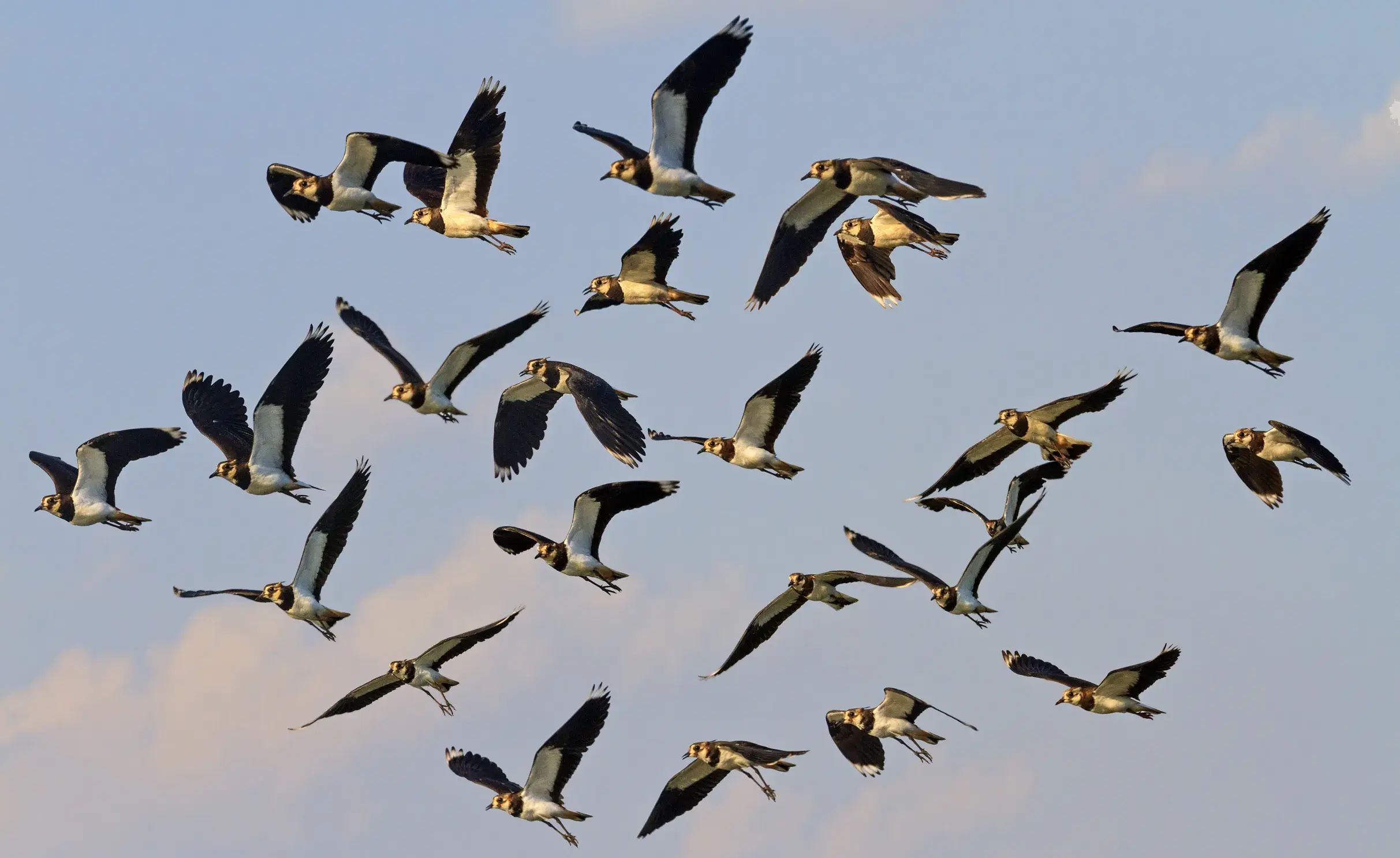
A Sure Sign of Spring
In March, lapwings return to their breeding territories after wintering in flocks.
The males perform spectacular tumbling display flights, twisting and diving through the sky while calling loudly to attract a mate.
Listen for their famous call while walking through farmland and grassland.
Master of Camouflage
Lapwings are ground-nesting birds, making them especially vulnerable to disturbance during the breeding season.
They prefer to build their nests in a simple scrape in short grass, so that they can see any predators approaching. They are particularly associated with traditional farmland and open landscapes like those around Adlington.
Typical habitats include:
- Wet grassland
- Farmland fields
- Flood meadows
- Coastal marshes
- Rough pasture
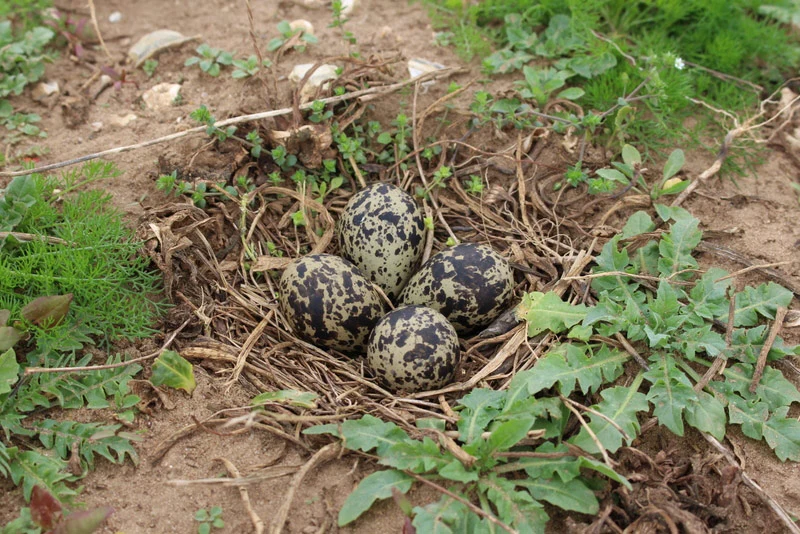
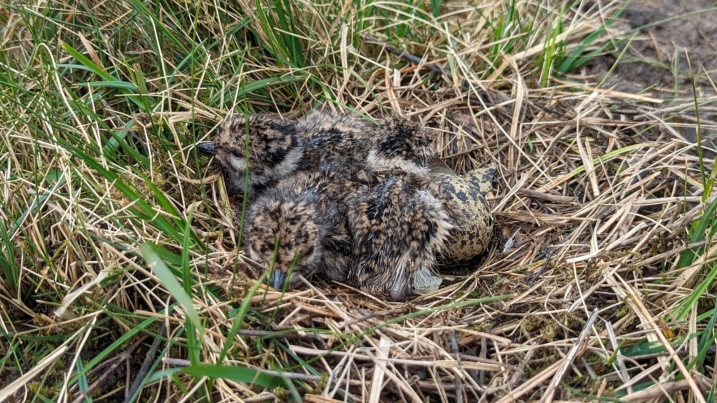
They will usually lay around four eggs which are incredibly well camouflaged and blend almost perfectly with the surrounding soil. The eggs take around 26 days to hatch.
When hatched, the chicks have fluffy down which is speckled brown and cream in colour. This helps them to blend into their surroundings and hide from potential predators. They are largely self-reliant even during their first days, and can be seen running around the grass and mud searching for insects.
If you see a lapwing flying overhead calling loudly or swooping, it may be protecting nearby chicks.
Why Lapwings Need Our Help
Lapwings were once extremely common across the UK, but their numbers have fallen by more than 50% since the 1990s. They are now on the UK Red List of Birds of Conservation Concern due to habitat loss and changes in farming. According to national bird surveys and conservation organisations such as the RSPB:
- 51% decline between 1995 and 2022
- A further 5% decline between 2022–2023
Protecting our farmland and wet grassland habitats is vital for their future.
Where to Look for Lapwings Around Adlington
- Adlington Hall farmland
Open pasture and farmland nearby have recorded displaying lapwings in spring. - North Cheshire Way footpath
This long-distance trail crosses farmland between Wilmslow and Adlington and offers good views across fields. - River Bollin Valley meadows
Grassland and riverside areas where lapwings have previously been observed. - Macclesfield Canal farmland
Footpaths and towpaths provide quiet vantage points overlooking farmland.
How Can You Help?
See if you can spot one on your next walk.
Noticing birds, plants and other wildlife is one of the most rewarding parts of spending time in nature - it’s great for our wellbeing too. By recording your lapwing sightings along the footpaths around Adlington, you can help build a clearer picture of where they are found, how their numbers are changing, and support local efforts to protect them.
Share a sighting with RECORD , Cheshire’s Local Environmental Records Centre.
If you’re exploring, please remember:
- Keep to public footpaths
- Keep dogs on leads near farmland
- Avoid disturbing birds on the ground and never approach nesting birds or chicks, even for photographs.
- Listen for their call
- Share sightings with our group
By enjoying the countryside responsibly, we can help protect these remarkable birds for future generations.
Learn More
For more information about lapwings and their conservation visit: